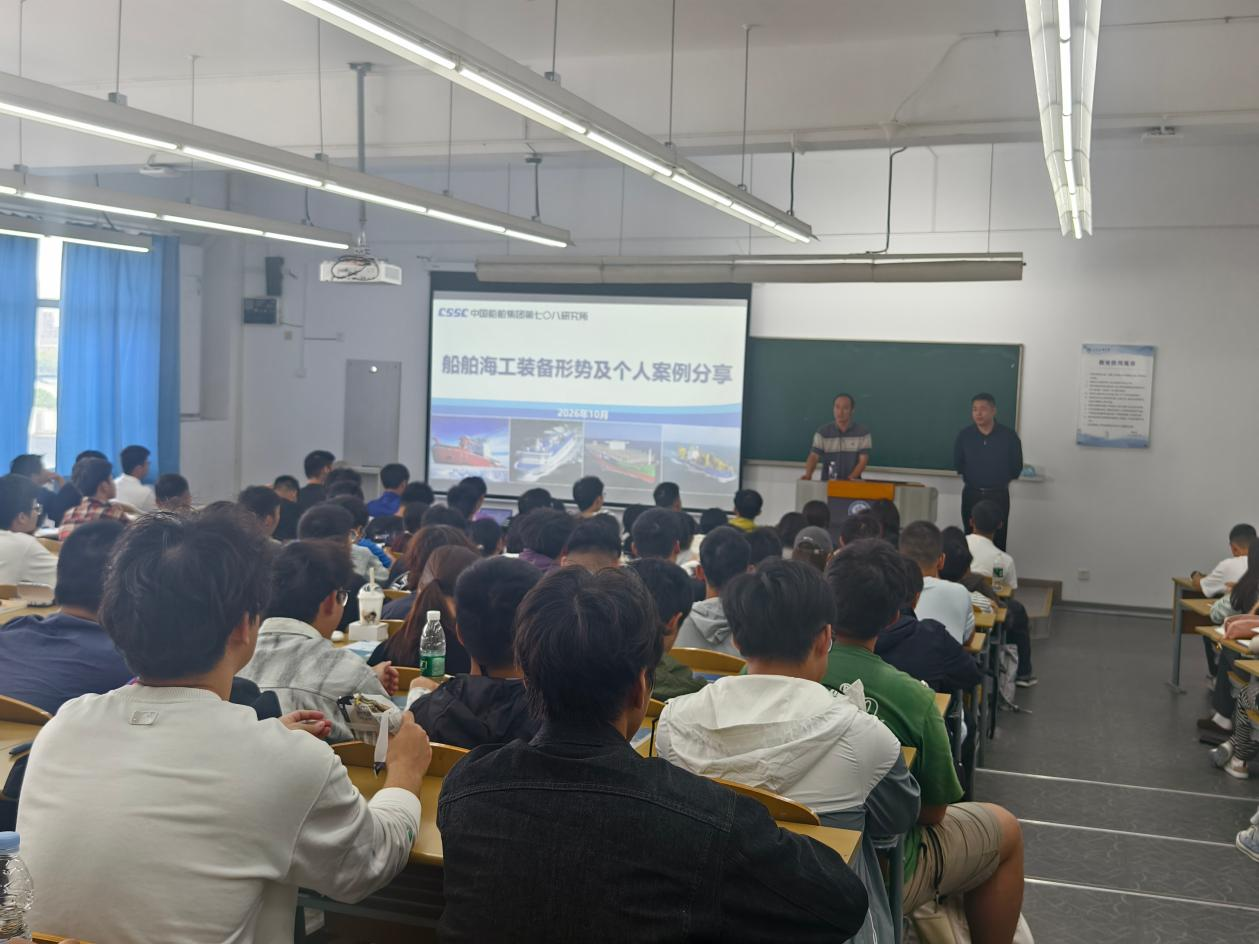
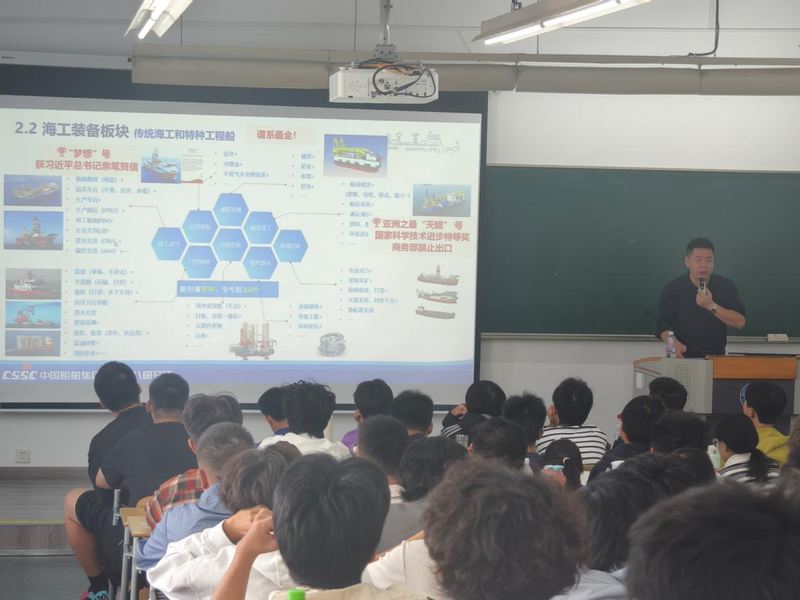
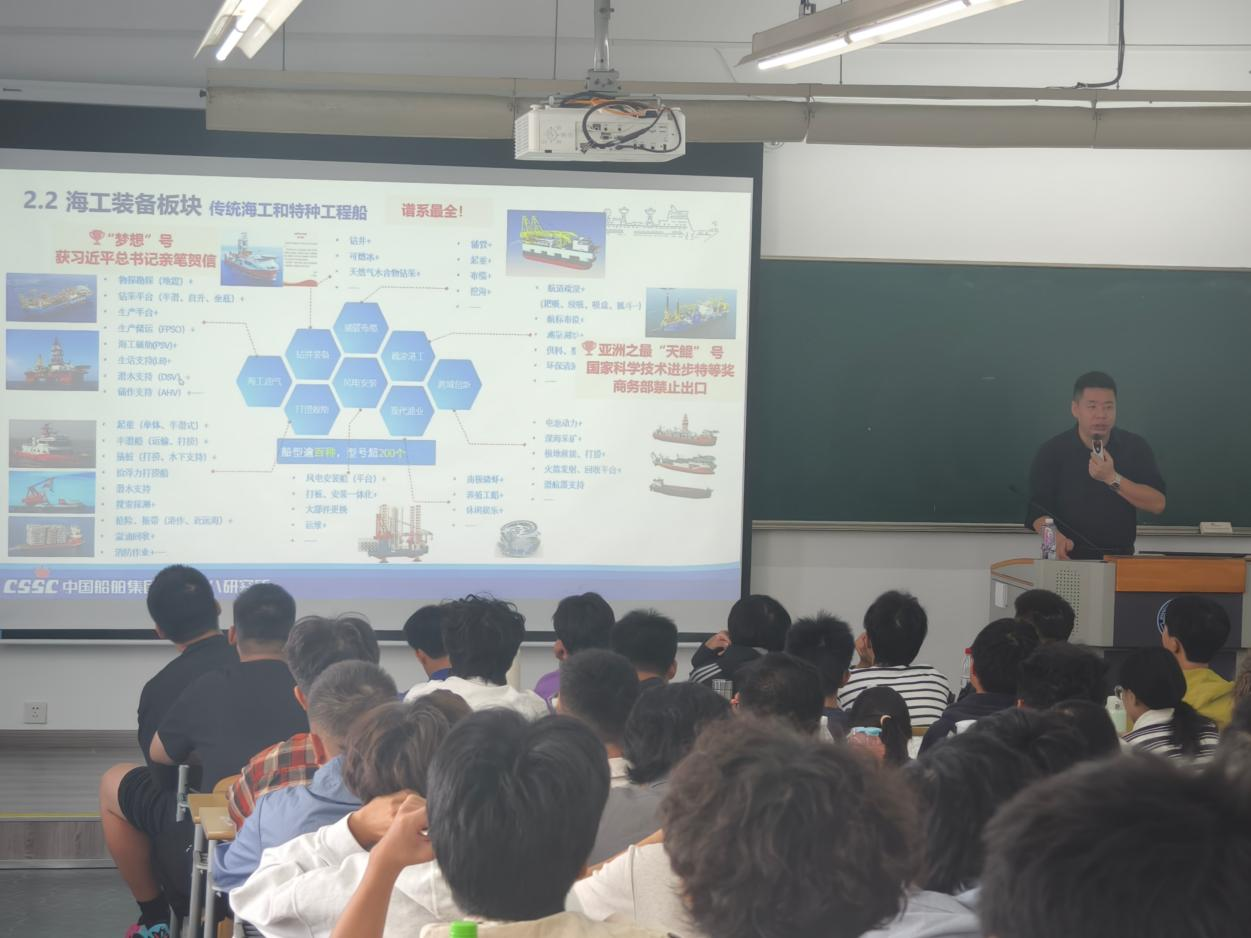
To further deepen the integration of industry and education and polish the ideological and political education brand of "Forging Souls for Naval Architecture and Ocean Engineering", the first session of the course Introduction to Naval Architecture and Ocean Engineering for the Naval Architecture and Ocean Engineering major at Shanghai Maritime University kicked off on October 9. Wei Zhiyuan, Chief Expert and Researcher from the No.708 Research Institute of China State Shipbuilding Corporation Limited, was invited to deliver a special lecture titled Development Status of Marine and Offshore Equipment and Personal Case Sharing for the 2026 freshmen.
A graduate of Shanghai Jiao Tong University, Wei Zhiyuan currently serves as Chief Expert and Researcher at the No.708 Research Institute of China State Shipbuilding Corporation Limited. He has long devoted himself to the overall R&D and design of special amphibious ships and special offshore vessels. As an expert for relevant fields of the military and the State Administration of Science, Technology and Industry for National Defence, he has presided over more than twenty national-level research projects and major product designs, boasting solid theoretical foundations and abundant practical experience in equipment development.
In the lecture, based on the national strategies of building a powerful maritime nation and a strong transportation country, Wei Zhiyuan systematically analyzed the current situation and trends in the development of marine and offshore equipment. Combined with real projects and engineering cases led by himself, he vividly presented the whole process of special amphibious ships and special offshore vessels, ranging from overall demonstration and conceptual design to development and delivery. Drawing on his own experience, he encouraged students to consolidate professional foundations, foster a deep sense of patriotism, and integrate personal growth into the great national cause of building a powerful maritime nation.
As the first lesson of Introduction to Naval Architecture and Ocean Engineering, this lecture marks an important practice of the college’s talent training reform featuring "mutual integration driven by both courses and projects". Under the reform plan, the college adheres to the principle of "setting ship-oriented goals upon admission, centering courses on ships, developing competence through projects, verifying outcomes via design, and promoting growth through competitions". It has built a project-based curriculum system for the 2026 freshmen that starts at the freshman year, runs through four years of undergraduate study and brings progressive challenges. Meanwhile, relying on the ideological and political education system of "Forging Souls for Naval Architecture and Ocean Engineering", the college invites chief engineers and naval vessel experts from the industry into classrooms. Iconic industrial cases and stories of major national projects are incorporated into teaching to strengthen students’ patriotism and professional identity with the aspiration of striving for maritime power and shouldering missions in shipbuilding.
The lecture hall was packed with an enthusiastic atmosphere. The students stated that this lesson enabled them to gain a more intuitive and in-depth understanding of the Naval Architecture and Ocean Engineering major, and further strengthened their determination to engage in the marine and shipbuilding industry and serve the construction of a powerful maritime nation.
In the next stage, the college will continue to deepen the integration of industry and education empowered by digital intelligence. More industrial experts and corporate engineers will be invited to participate in classroom teaching and project guidance, advancing the reform of "mutual integration driven by both courses and projects". The college aims to cultivate more high-calibre talents for naval architecture and ocean engineering with sound theoretical knowledge, outstanding practical skills, strong innovative capacity and profound patriotism.
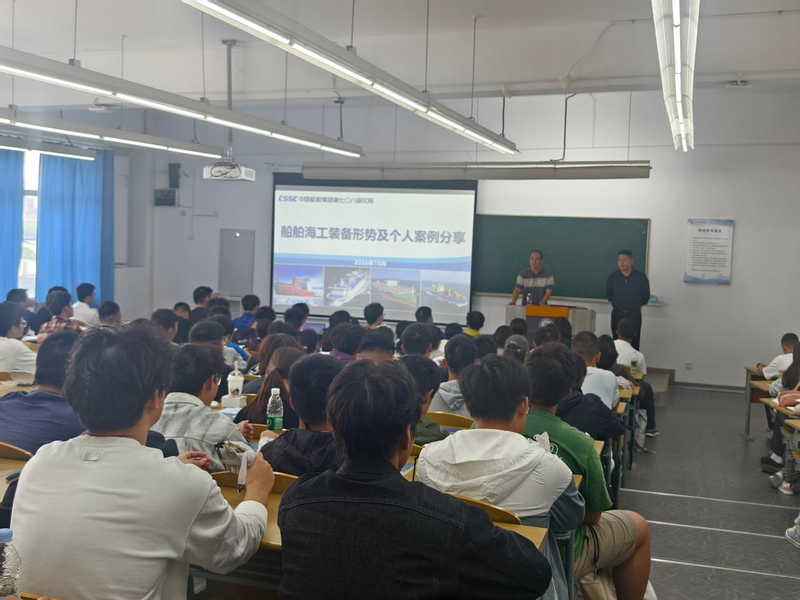
Figure 1 Scene of the Special Lecture