
To thoroughly implement the university’s plan for deepening comprehensive reform, Vice President Yin Ming headed a research team on August 17 and 19 to visit Shanghai Oceanic Administration and CSSC Haizhou System Technology Co., Ltd. (hereinafter referred to as CSSC Haizhou) for special summer industrial and corporate research. The team conducted on-site investigations into talent demands concerning green and low-carbon marine governance, smart ocean monitoring, and deep-sea offshore equipment. Persons-in-charge from the Human Resources Department and the College of Marine Science and Engineering, as well as faculty representatives, took part in the research.
During the visits, Vice President Yin Ming, on behalf of the university, expressed gratitude to the two organizations for their long-term support. He noted that the university is earnestly implementing the requirements laid out in the Outline of the Plan for Building a Powerful Country in Education (2024—2035) on deepening industry-education integration and improving the quality of independent talent cultivation. The university is actively aligning itself with the national strategies of building Shanghai into a modern marine city and realizing domestic substitution of marine industrial software.
He pointed out that the university will continue to leverage its disciplinary strengths in shipping, logistics and marine studies. Centering on Shanghai’s “3+5+X” modern marine industrial system and the localization of shipbuilding industrial software, the university will build a long-term cooperation platform covering joint talent training, collaborative scientific research, co-construction of practical training bases, and joint development of courses and textbooks. It will steadily improve the quality of independent talent cultivation and foster high-caliber interdisciplinary professionals who precisely match the demands of the marine and shipbuilding industries.
Jin Hongsong, Deputy Director of Shanghai Oceanic Administration, stated that Shanghai has restored 34 kilometers of coastline and 320 hectares of sea areas in total. The industry is in urgent need of professionals with practical capabilities including planning for ecological restoration projects, field monitoring, and post-operation maintenance. He hoped that both sides would carry out in-depth cooperation in marine ecological restoration monitoring and assessment, marine disaster early warning and forecasting, environmental impact evaluation of offshore new energy, and measurement standards for marine carbon sinks. The two parties plan to jointly build a coastal ecological field practice base and incorporate real cases reflecting Xi Jinping Thought on Ecological Civilization into classroom teaching, so as to provide industrial support for the university to build marine power and cultivate marine professionals.
Zhu Yu, Party Secretary of CSSC Haizhou, introduced that the company has launched three major platforms: Coral Marine 2.0 digital design platform, Hupo PLM 2.0 full-lifecycle management platform, and Haixing Foundation 1.0 basic general platform. These platforms have achieved full coverage of integrated CAD/CAE functions and passed real-ship verification at Dalian Shipbuilding Industry and Guangzhou Shipyard International. Nevertheless, the industrial chain still faces bottleneck technical problems. He expected further in-depth collaboration with the university on setting core competency standards for interdisciplinary talents specializing in domestic shipbuilding industrial software, building industry-education collaborative education mechanisms, developing joint practical training bases, exchanging industrial tutors, and bringing domestic ship software into university courses.
This research activity is an important measure taken by the university to implement the summer field survey deployment of the Shanghai Municipal Education Commission, which requires universities to identify industrial demands and collect industry advice. By systematically sorting out the demand list, problem list and suggestion list collected from the field visits, the university will translate research outcomes into a coordinated channel linking talent training, disciplinary development, scientific and technological innovation, and industrial progress, boosting the high-quality development of the university.
Photography & Text: Zhang Panlong, Yuan Rui, Hou Xianrui
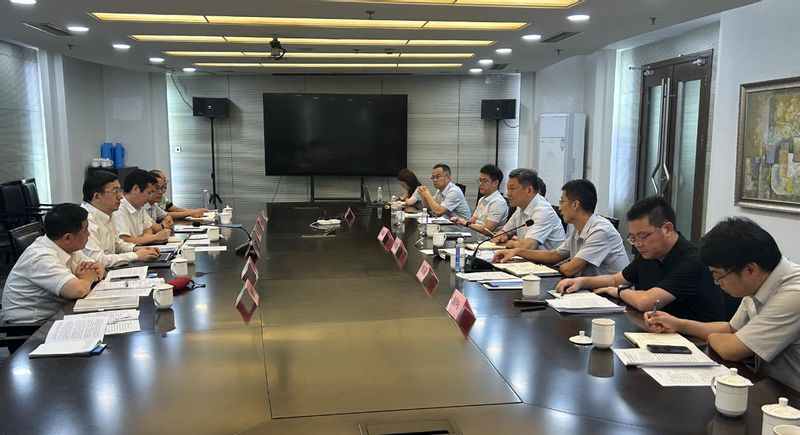
Figure 1 Research Scene at Shanghai Oceanic Administration
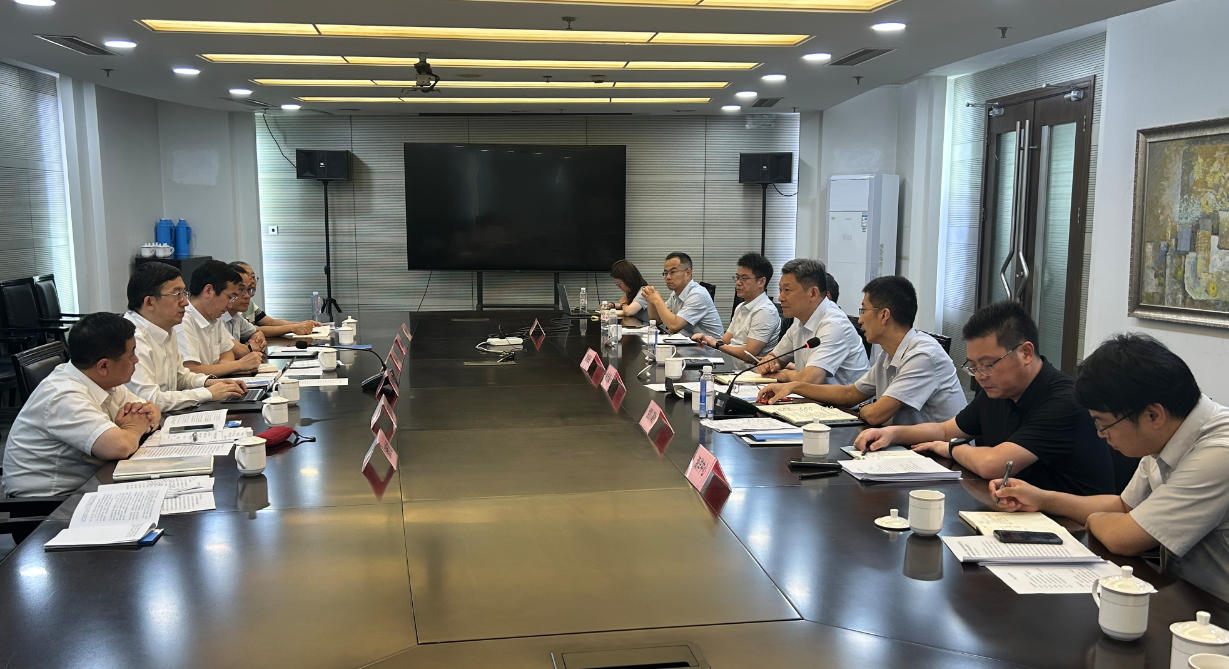
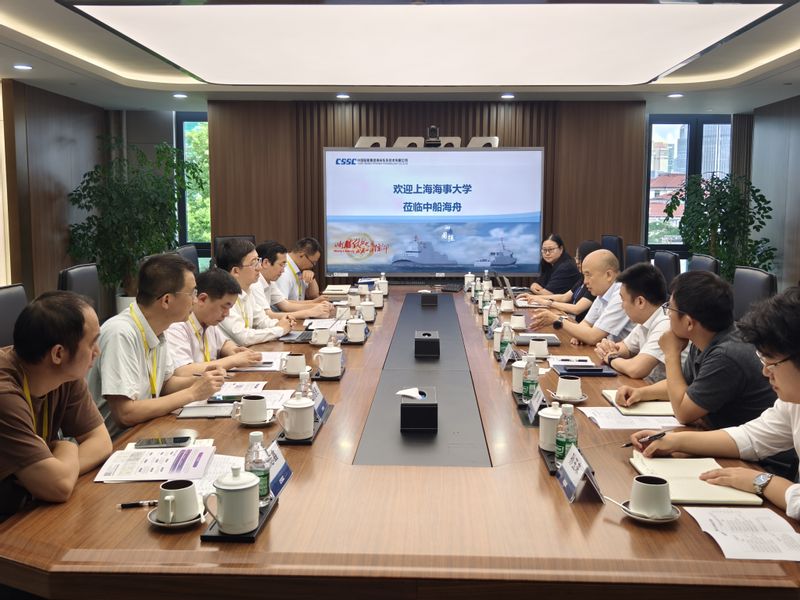
Figure 2 Research Scene at CSSC Haizhou
