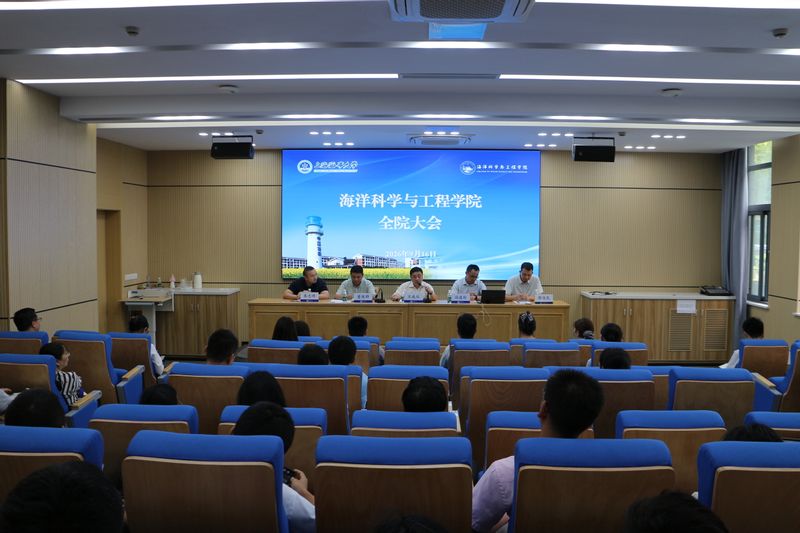
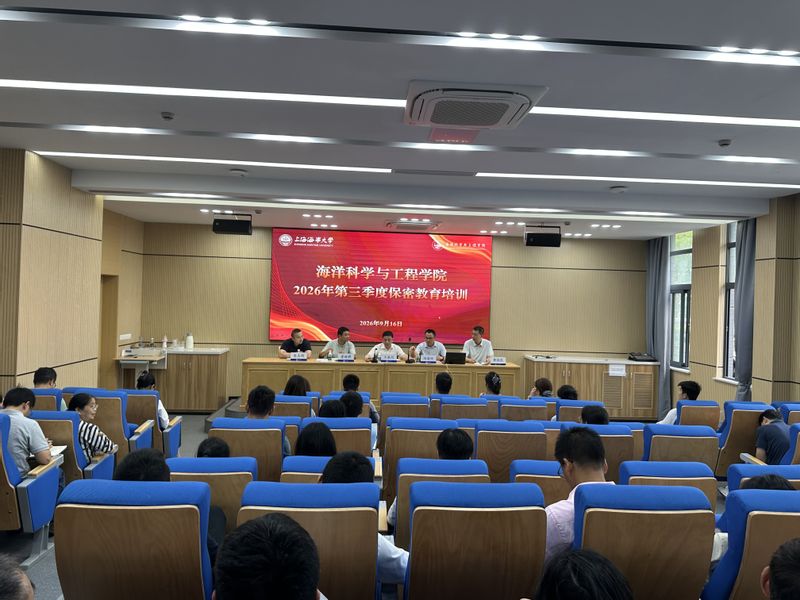
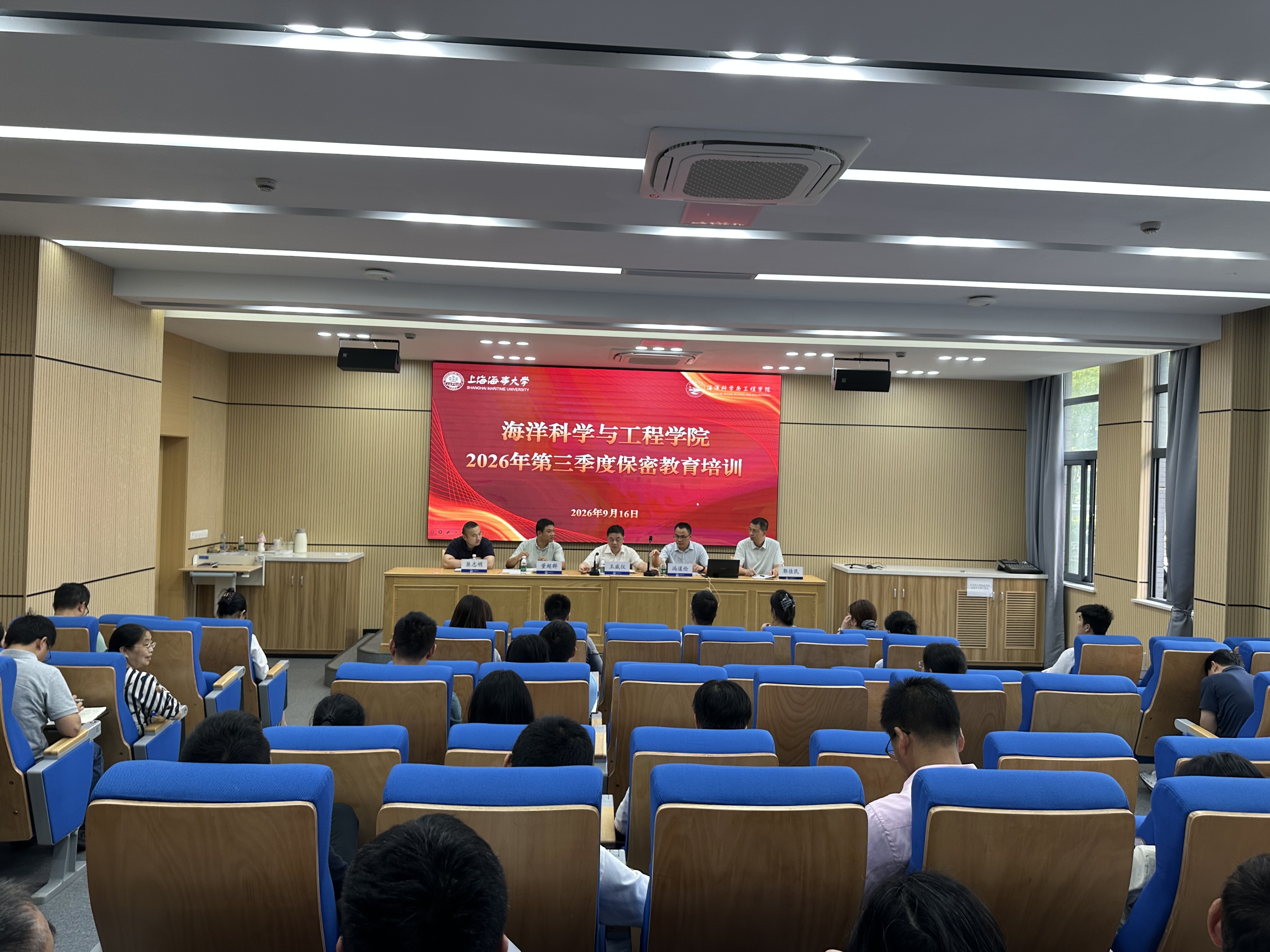
On the afternoon of September 16, the College of Marine Science and Engineering convened the faculty meeting for the 2026 autumn semester. The meeting conducted an in-depth analysis of the new situation and challenges facing the college and arranged all key tasks for the new semester in a comprehensive manner. Wang Weiyi, Secretary of the College Party Committee; Feng Daolun, Deputy Secretary of the Party Committee and Dean; Dong Chaoqun, Deputy Secretary of the Party Committee; Guo Jiamin and Chao Zhiming, Vice Deans, attended the meeting. Secretary Wang Weiyi presided over the session.
Secretary Wang Weiyi first conveyed the spirit of the training session for mid-level cadres of the university for the new semester. He emphasized that 2026 marks the launch year of the 15th Five-Year Plan. All faculty members should align themselves with national strategies and the requirements for building Shanghai into an international shipping center and a modern marine city. The college should seize major opportunities including the university’s “Double First-Class” initiative, the Dual Excellence Project and the comprehensive reform under the “One University, One Policy” scheme. Meanwhile, it must clearly recognize its development shortcomings, face up to the pressures in this new stage of development, build consensus among all staff and ensure full implementation of responsibilities.
In light of the college’s operational reality, Secretary Wang put forward clear requirements for the key work in the new semester.
First, pool efforts to further advance the project of fostering virtue through education. The college shall elevate Party building work from benchmark status to exemplary status, strengthen brand development and improve the tiered training system. It shall expand curriculum ideological and political education from pilot cases to full coverage, build a case library for marine ecological civilization, further develop joint Party building for industry-education integration, and extend high-quality educational outcomes to industries and primary and secondary schools. Centering on organized research, the college will break institutional barriers through the Academician Workstation, jointly apply for national key R&D programs and international cooperation projects with industrial partners, cultivate candidates for the National Outstanding Youth Fund, foster a healthy competitive environment where competent personnel advance and outstanding performers excel, and stimulate enthusiasm for work and innovation.
Second, focus on core responsibilities, deepen teaching reform and consolidate the foundation of talent cultivation. Taking engineering education accreditation and special training programs as key priorities, the college will identify weaknesses in teaching, integrate basic disciplines such as mathematics, physics and chemistry into the whole talent cultivation process, reform syllabuses, promote organized teaching, strengthen interdisciplinary integration and in-depth industry-education integration, and shift talent cultivation from a quantity-oriented model to a quality- and efficiency-oriented model. Research shall be oriented toward national strategies and industrial demands, with strengthened teamwork on tackling key problems. High-level research shall feed back into high-quality talent training. The college will improve the education system with joint teaching by industrial experts, and work to raise the employment quality of graduates to support high-quality and full employment of students.
Third, uphold Party building guidance, practice a correct view on performance and gather momentum for development. The college will continue the study and education campaign on establishing and practicing a correct view on performance, and drive high-quality development through high-quality Party building. It will strengthen Party branch development and work style, enforce discipline, and ensure the delivery of work to the grassroots. Members of the Party committee, branch secretaries and department heads shall conduct frontline surveys, deliver practical services and resolve difficulties for teachers and students. Service brands such as the summer care program for children and marine science popularization lectures will be further enhanced. All faculty shall guard the bottom line of ideological security and campus safety, align personal growth with the college’s development, unite as one and work diligently to push the college’s undertakings to new heights.
Dean Feng Daolun delivered a speech on the backdrop of the launch of the 15th Five-Year Plan, bottlenecks in college development and key tasks for the new semester, defining five core priorities for this semester.
First, grasp the general trend and take disciplinary development as the main line. The university adheres to the general principle of “focusing on services and strengthening contributions” and presses ahead with comprehensive reform and the “Double First-Class” initiative. Disciplinary construction is the overarching strategic priority. While the college has achieved phased progress, it has reached a bottleneck. It is imperative to raise awareness of risks and take proactive steps to break through constraints.
Second, deepen industry-education integration to improve the quality and efficiency of talent cultivation. The college has laid a solid foundation for industry-education integration. The next step is to deliver tangible results. It will strictly enforce requirements for industrial practice for professional master’s and doctoral students, and steadily optimize the layout of academic programs. Flexible models including micro-majors, special classes and customized programs will be adopted to meet short-term industrial demands, balancing stable program construction and adaptive development.
Third, adjust the research paradigm and advance organized research. Research shall be demand-driven, targeting real industrial problems. The college will improve the research workflow and accelerate the translation of research findings. Relying on the Academician Workstation, it will pool teams around defined research directions and systematically carry out organized research. Meanwhile, research outcomes will better support teaching to improve undergraduates’ ability in innovation and practice.
Fourth, uphold high standards for faculty recruitment and prioritize the development of leading scholars. Talent recruitment will follow strict criteria. The college will focus on recruiting and nurturing young backbones and industrial leaders with the potential to compete for national talent titles, balancing academic competence and industrial connections. It will leverage academicians to support the growth of young teachers, broaden recruitment channels, carry out targeted hiring and build a high-quality talent pipeline.
Fifth, advance digital empowerment to reshape teaching modes. Faced with the transformation brought by artificial intelligence, all teachers shall adapt to technological advances and transform classroom teaching from traditional knowledge transfer toward cultivating students’ abilities, thinking skills and innovation potential, so as to enhance students’ higher-order thinking and independent inquiry capabilities.
Dong Chaoqun, Deputy Secretary of the Party Committee, and Vice Deans Guo Jiamin and Chao Zhiming respectively assigned tasks for their respective portfolios. At the end of the meeting, the college organized confidentiality education training for the third quarter of 2026 and screened relevant educational videos.
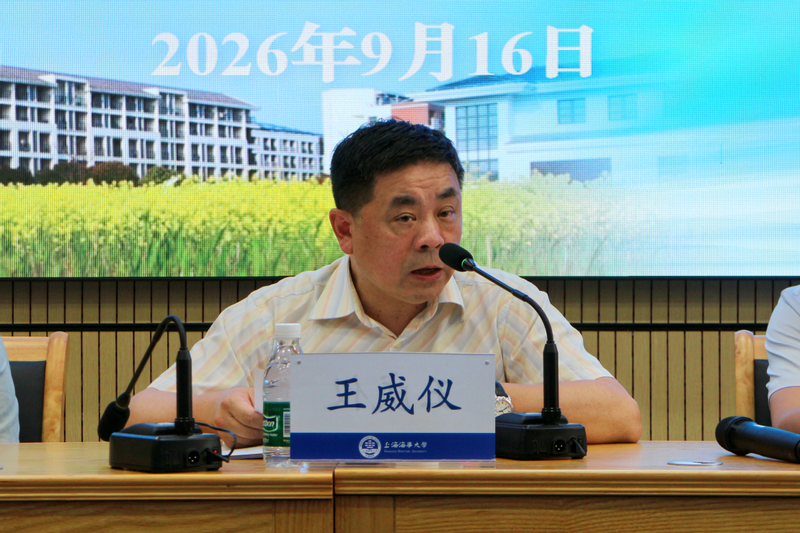
Figure 1 Secretary Wang Weiyi Makes Work Arrangements for the New Semester

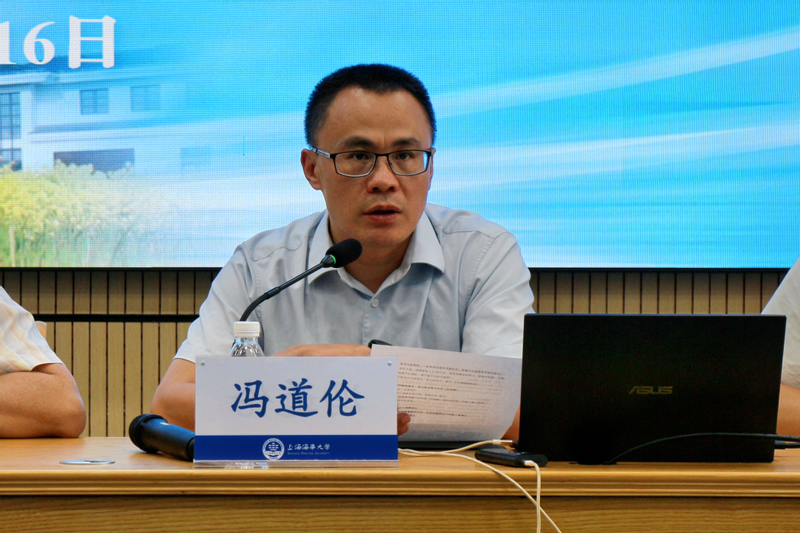
Figure 2 Dean Feng Daolun Makes Work Arrangements for the New Semester