
To help students clarify their academic plans, understand industry prospects and broaden their horizons in scientific and technological innovation, the College of Marine Science and Engineering launched the 8th "Face-to-Face with Tutors" on-site Q&A activity in the activity room of Building 60 on May 25. Wu Gongxing, Secretary of the Faculty Party Branch of the Naval Architecture Department, was invited as the guest speaker.
During the session, combined with the latest industry trends, Teacher Wu Gongxing systematically introduced the employment prospects and development paths of Naval Architecture and Ocean Engineering. He shared efficient learning methods and solutions to key and difficult points tailored to the characteristics of the major, helping students consolidate their professional foundation and improve learning efficiency.
Furthermore, Teacher Wu focused on the cutting-edge research of unmanned surface vehicles (USVs). He elaborated on three core technical modules, including automatic route planning, automatic berthing and multi-boat cooperative operation, and explained the technical difficulties and practical application value of intelligent unmanned vehicles. Considering the interdisciplinary nature of intelligent ship technology, he sorted out the integrated application of artificial intelligence, information theory, operations research and automatic control in USV perception and decision-making, data processing, path optimization and attitude control, guiding students to form interdisciplinary thinking for academic research and study.
In addition, Teacher Wu gave a detailed interpretation of key scientific and innovation competitions, especially the National Marine Vehicle Design and Manufacturing Competition. He analyzed optional competition directions and preparation strategies, emphasizing that competitions can effectively promote learning, enhance students’ innovative and practical abilities, and boost their further study and employment competitiveness. He encouraged students to actively participate in scientific and technological innovation practices.
With rich content and student-oriented arrangements, the activity helped students clarify their academic goals, keep abreast of industry frontiers, and master practical approaches for scientific innovation. It further broadened their professional vision and laid a solid foundation for their growth and in-depth development in the field of naval architecture and ocean engineering.
Written by: Shu Honglin, Zhu Diyao
Photographed by: Shu Honglin
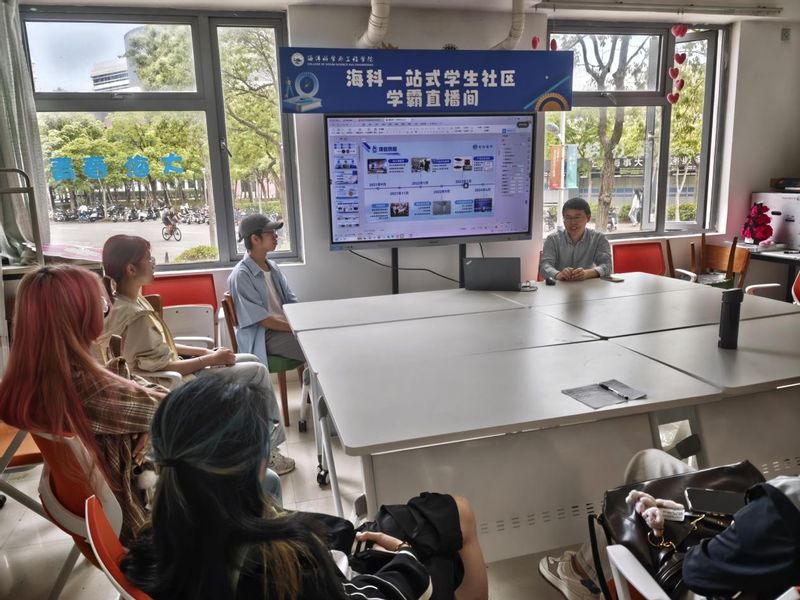
Figure 1: Activity Scene