
College of Marine Science and Engineering Holds the 3rd "Face-to-Face with Teachers" On-site Tutoring at One-Stop Student Community
To resolve undergraduates’ puzzles concerning academic planning and career development in Naval Architecture & Ocean Engineering and clarify their study goals and employment directions, the third session of "Face-to-Face with Teachers" on-duty Q&A activity was hosted by the College of Marine Science and Engineering in the activity room of Building 60 on the evening of April 22. Teacher Song Ying from the Department of Naval Architecture was invited as the guest speaker.
Centering on five key themes including coursework study, internships, postgraduate entrance examination, job hunting and overseas study, Teacher Song delivered a systematic lecture tailored to the characteristics of naval architecture majors. Regarding tough core basic courses such as Fluid Mechanics and Structural Mechanics that trouble most students, she analyzed the intensive curriculum featuring both theoretical lectures and lab sessions, and previewed syllabus and key points of follow-up core courses like Principles of Ship Design, enabling students to sort out the overall study framework and boost learning efficiency.
In terms of internships, she sorted out various internship accesses and stressed that outstanding academic performance and practical experience are core assessment criteria for employers. As for the increasingly popular postgraduate admission, she analyzed the latest examination situation, compared the pros and cons of applying for domestic or external universities, and distinguished academic master’s from professional master’s in training focus, exam subjects and career paths to help students make rational positioning.
For employment, she mentioned most bachelor graduates secure positions at shipyards; female students are advised to improve comprehensive competitiveness while postgraduates have wider options including research institutes and design corporations. For those planning overseas further education, she recommended colleges with high industrial recognition and compatible curriculum with domestic naval architecture disciplines, and encouraged applications for government-sponsored programs or scholarships to cut overseas study costs and improve return on investment.
Focused on students’ real needs, the informative activity greatly relieved their anxiety over future development. In the future, the college will continuously optimize the "Face-to-Face with Teachers" brand program, arrange regular faculty consultations in student community and deliver targeted tutoring to fuel students’ growth.
Written by: Wang Yicheng, Zhu Diyao
Photographed by: Wang Yicheng
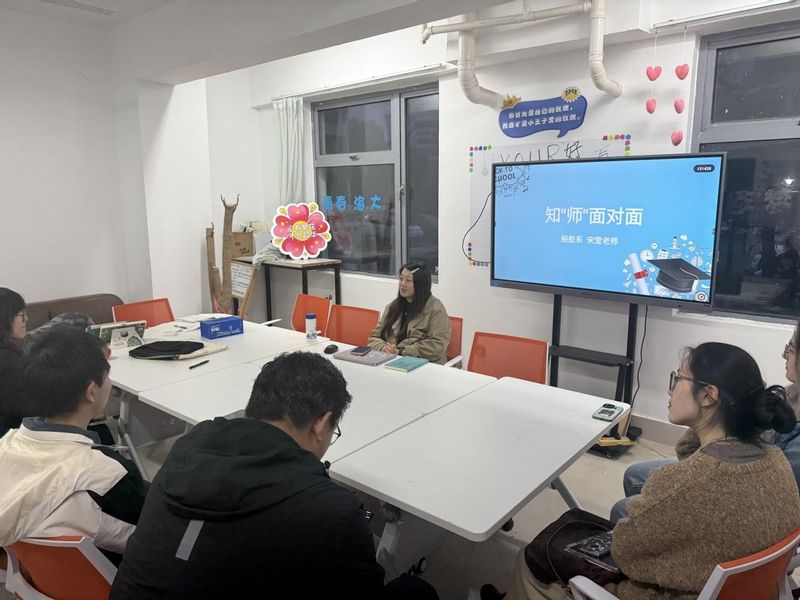
Figure 1: Activity Scene
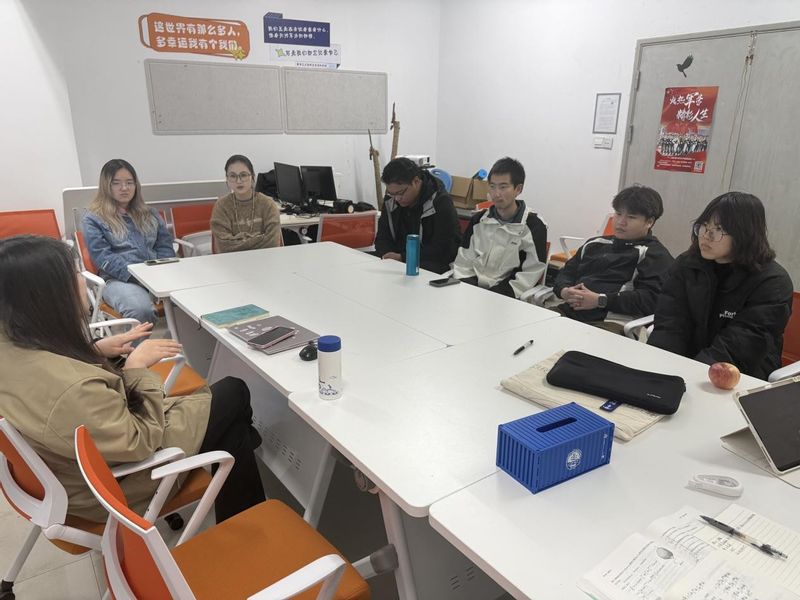
Figure 2: Activity Scene