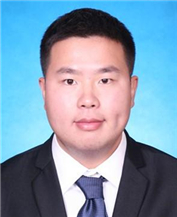
 俞强(博士、副教授)
一、基础信息
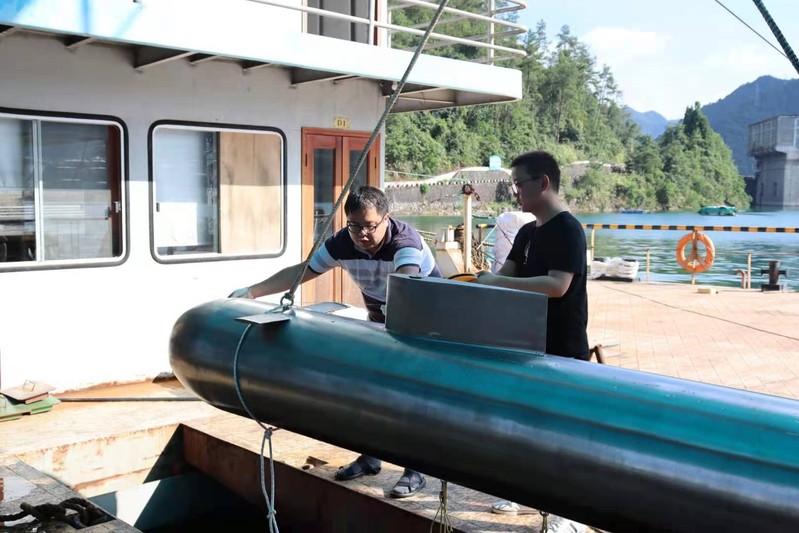
俞强,男,汉族,1990年11月生,工学博士,副教授,现任中国造船学会船舶力学学术委员会-船舶建造工艺力学组委员。主要从事舰船板壳结构的非线性力学解析计算方法、海洋工程非线性水动力学与水声学交叉、基于数据科学与人工智能的无人船舶/无人艇自主智能航行性能工程技术的研究。主持或参与国家自然科学基金、国家重点实验室基金、工信部项目十余项,发表数十篇高水平SCI论文。
ORCID: 0000-0003-4736-6512
ResearchGate: https://www.researchgate.net/profile/Qiang-Yu-22/research
(一)个人基础信息
性别:男
出生年月:1990年11月
职务:副教授
博硕导:硕士生导师
电子邮箱:yuqiang+shmtu.edu.cn;jsslsxyq+163.com
(二)教育经历
2014.09-2018.12上海交通大学船舶与海洋工程工学博士(导师:廖世俊教授)
2011.09-2014.04 江苏科技大学 船舶与海洋工程工学硕士(导师:杨松林教授)
2008.09-2011.06 江苏科技大学(提前毕业) 船舶与海洋工程工学学士
(三)工作经历
2023.07- 至今 上海海事大学 船舶与海洋工程系副教授
2019 -2023.06 上海海事大学 船舶与海洋工程系讲师
(四)社会兼职
中国造船学会船舶力学学术委员会-船舶建造工艺力学组委员(2023-2028)
中国数学学会奇异摄动专业委员会会员
中国力学学会流体力学专业委员会会员
中国声学学会水声学专业委员会会员
上海船舶与海洋工程学会会员
二、科学研究
(一)研究领域
1.舰船复合材料板壳结构多场耦合强非线性力学(学术):舰船复合材料板壳非线性弯曲/屈曲/振动及近似解析方法(摄动/同伦分析);舰船复合材料板壳弹性振动-声辐/散射理论及近似解析方法(声-振耦合);船舶建造工艺力学-板壳残余应力与变形 (湿-热-力耦合);
2.海洋工程非线性流-声耦合力学 (学术):水波(表面波、内波)与水声传播相互作用理论;水动力噪声理论(湍流、空化)及高精度数值方法;非线性水声学理论及解析近似方法(摄动/同伦/小波同伦);
3. 绿色船舶-航行性能与能效优化 (工程技术):水面船舶和深潜器航行性能(阻力、推进、操纵、耐波)综合设计与优化;基于大数据的船舶能效大模型统计分析与优化方法;船舶节能减排技术(气层减阻、特种推进器、节能装置设计);
4.智能船舶-无人船艇(MASS)自主航行(工程技术):船/艇非线性运动系统动力学、运动智能预报与控制;自主船/艇航行路径规划、避碰、路径跟踪算法及实验技术。
(二)科研项目
1. 国家自然科学基金青年项目,求解力学中强非线性问题的小波同伦方法拓展研究(11902189),2020/01-2022/12, 主持;
2. 非线性海洋内波作用下的声传播模型及小波算法研究,海洋工程全国重点实验室,2023/12-2025/11, 主持;
3. 基于数据驱动的船舶运动响应预报与优化控制算法研究, 航运技术与安全国家重点实验室基金,2023/10-2024/12,主持
4. 基于机器学习的船舶路径规划和自主避碰算法, 研究所横向项目,2023/10-2024/12,主持
5. 水下复杂目标声散射替代模型及数据同化模块开发, 研究所横向项目,2023/10-2025/10,主持
6. 基于人工智能船舶能效动态优化算法策略研究, 航运技术与安全国家重点实验室基金, 2022/10-2023.11, 主持,结题;
7. 变厚度薄板大挠度弯曲精确小波解 (No.1906),海洋工程国家重点实验室基金, 2020/01-2021/12, 主持;
8. 波浪中运动目标姿态工程预报研究,海洋智能装备与系统教育部重点实验室基金, 2020/09-2021.12, 主持;
(三)代表性论文成果
[1]Qiang Yu*, Junfeng Xiao, Kaiqi Zhao. On accurate closed-form Coiflet solutions of nonlinear Korteweg–de Vries-Burgers equation for shallow water wave by a time-integration wavelet homotopy method. Mathematics and Computers in Simulation 2026,439: 458-482.
[2]Qiang Yu*, Hongli Gu, Shuaimin Wang, Hang Xu. Analytical solutions for large-deflection bending of variable-thickness inhomogeneous functional graded composite circular plates with parameterized boundaries under hygro-thermo-mechanical loads. Composite Structures (2025): 118721.
[3]Qiang Yu*, Junfeng Xiao, Hang Xu, Zixin Wu. Nonlinear thermo-mechanical bending analysis of variable-thickness parallelogram plates in curved hull via a homotopy-based wavelet method. Applied Ocean Research 154 (2025): 104334.
[4]Qiang Yu*, Junfeng Xiao, Hang Xu. Three-dimensional hygro-thermo-mechanical bending analysis of anisotropic skewed parallelogram plates on a tri-parameter foundation using a wavelet method. Thin-Walled Structures 201 (2024): 112006.
[5]Qiang Yu*, Hang Xu. A bran-new equivalent orthotropic-plate method for nonlinear bending of combined double bottom structure with variable stiffness, Composite Structures, 305(2023) :116547.
[6]Qiang Yu*, A homotopy-based wavelet method for extreme large bending analysis of heterogeneous anisotropic plate with variable thickness on orthotropic foundation. Applied Mathematics and Computation 439 (2023): 127641.
[7]Qiang Yu*, A Coiflet Wavelet Homotopy Technique for Nonlinear PDEs: Application to the Extreme Bending of Orthotropic Plate with Forced Boundary Constraints. Advances in Applied Mathematics and Mechanics 16 (2023).
[8]Qiang Yu*. Wavelet solution for hygro-thermo-mechanical bending of initially defected plate undergoing large deformation on nonlinear elastic foundation. Thin-Walled Structures 179 (2022): 109601.
[9]Sohail Ahmed, Hang Xu*, Yue Zhou, Qiang Yu, Modelling convective transport of hybrid nanofluid in a lid driven square cavity with consideration of Brownian diffusion and thermophoresis, International Communications in Heat and Mass Transfer, 137(2022), 106226.
[10]Qiang Yu*. Large deflection bending analysis of variable-thickness tapered plates under three-dimensionally hygro-thermo-mechanical loads. International Journal of Mechanical Sciences (2021): 106648.
[11]Qiang Yu, Hang Xu*. A homotopy-based wavelet approach for large deflection of a circular plate on nonlinear foundations with parameterized boundaries. Computers & Mathematics with Applications 90 (2021): 80-95.
[12]Qiang Yu*. A decoupled wavelet approach for multiple physical flow fields of binary nanofluid in double-diffusive convection. Applied Mathematics and Computation 404 (2021): 126232.
[13]Qiang Yu*. A hierarchical wavelet method for nonlinear bending of materially and geometrically anisotropic thin plate. Communications in Nonlinear Science and Numerical Simulation 92 (2021): 105498.
[14]Qiang Yu*. Wavelet-based homotopy method for analysis of nonlinear bending of variable-thickness plate on elastic foundations. Thin-Walled Structures 157 (2020): 107105.
[15]Anyang Wang, Hang Xu*, Qiang Yu. Homotopy Coiflets wavelet solution of electrohydrodynamic flows in a circular cylindrical conduit. Applied Mathematics and Mechanics-English Edition, 2020:1-18.
[16]Qiang Yu, Hang Xu*, Shijun Liao. A novel Homotopy-wavelet approach for solving stream function-vorticity formulation of Navier-Stokes equations. Communications in Nonlinear Science and Numerical Simulation, 2019, 67: 124-151.
[17]Qiang Yu, Hang Xu*, Shijun Liao. Analysis of mixed convection flow in an inclined lid-driven enclosure with Buongiorno’s nanofluid model. International Journal of Heat and Mass Transfer, 2018,126:221-236.
[18]Qiang Yu, Hang Xu*. Novel wavelet-homotopy Galerkin technique for analysis of lid-driven cavity flow and heat transfer with non-uniform boundary conditions. Applied Mathematics and Mechanics-English Edition, 2018, 39(12): 1691-1718.
[19] Qiang Yu, Hang Xu*, Shijun Liao. Nonlinear analysis for extreme large bending deflection of a rectangular plate on non-uniform elastic foundations. Applied Mathematical Modelling, 2018, 61:316-340.
[20]Qiang Yu, Hang Xu*, Shijun Liao. Coiflets solutions for Föppl-von Kármán equations governing large deflection of a thin flat plate by a novel wavelet-homotopy approach.Numerical Algorithms79.4 (2018): 993-1020.
[21]俞强, 杨松林等. UUV操纵性能综合优化模型研究[J]. 中国舰船研究, 2014, 9(1):31-39.
[22]俞强, 杨松林等. 基于高速单体无人艇航行性能的并行优化方法[J]. 舰船科学技术, 2014, 36(3):40-45.
[23]俞强, 杨松林等. 基于CFD不同AUV艇体阻力性能研究[J]. 船海工程, 2014(2):177-181.
三、教学信息
(一)授课信息
本科生课程:船舶流体力学(48学时)、船舶结构力学(48学时)、船体振动与噪声(16学时)、海洋工程波浪力学(32学时)、海洋声学基础(32学时)
硕士学位课:船舶与海洋结构物环境载荷(Sea loads on ship and offshore structures) (硕士学位课,32学时,双语)
博士学位课:水波动力学基础(博士学位课,32学时)
(二)招生计划与培养要求
招收专业:船舶与海洋结构物设计制造学术硕士(每年2名)、船舶工程和海洋工程专业型硕士(每年2-3名),围绕AI+船舶领域的研究,AI主要围绕机器学习、LLM大模型等在船舶领域的应用。
1. 品格素养:具备正直诚信的品格,勤奋务实的工作作风,以及追求卓越的学术态度;有志于服务国家的航运、船舶、海洋的行业。
2. 专业要求:
(1) 欢迎船舶与海洋工程本专业及航海技术、轮机工程、交通运输工程(国际航运)相近专业加入团队,可根据个人兴趣,灵活选取方向;
(2) 欢迎本科为数学与应用数学、流体/固体力学专业同学加入团队,主要从事基于AI+船舶力学的科学研究;
(3) 欢迎本科为大数据与人工智能、计算机科学与技术、软件工程的跨专业同学加入团队,需熟练掌握一门编程预言(C++、Python)和数据库(SQL、Navicat),熟练运用Microsoft Visual Studio,主要从事基于AI+船舶性能、航运大数据、智能船舶控制的技术研究。
3. 能力基础:
英语水平:最好有CET-6,具备扎实的数学力学建模能力与编程实践能力;英语阅读写作能力优良(注:英语专业基础薄弱但学习意愿强烈者,需做好加倍努力的准备)。
欢迎邮件联系:yuqiang+shmtu.edu.cn、jsslsxyq+163.com (+为@)